Wednesday, February 18, 2015

Wine Service


Talking wine with guests

Guests might ask for wines that we don’t carry, or might be confused by our list. New World wines (US, South America, Australia, New Zealand, South Africa…) are often listed by varietal (Chardonnay, Cabernet Sauvignon, Sauvignon Blanc) while European (“Old World”) wines are generally listed by the region they are produced in (Chablis, Medoc, Sancerre) If a guest requests something that we don’t have, try to respond to the “spirit of the request” instead of the varietal. When we talk about wine, we are often translating what we want (for example, I might want a light, spritzy, and refreshing white) into something we know (say, Pinot Grigio). My server in this scenario might say “We don’t carry Pinot Grigio” or they might say “Let me get you a taste of Muscadet, it’s light and refreshing like Pinot Grigio.” The second answer will make me feel heard and taken care of, while the first doesn’t advance my cause for getting a glass of white wine.

When recommending or describing wine, try to use sensory descriptors rather than technical ones. Describe the flavor, texture, or body rather than the amount of time in oak or the percentage of cabernet or merlot unless those technical facts are directly responsible for the flavors or reasons for a particular pairing.

If you feel unsure, never hesitate to present someone new to the table. This only increases the trust the guests has in you.

When taking wine by the glass orders, assure the guests that we always offer a taste of the wine before pouring the glass, and that they are more than welcome to choose a different wine after tasting.

When taking bottle orders, offer to decant all red wines. A simple “would you like it decanted?” is the best way to pose that question.

Steps for bottle service

1. Place the proper glassware and decanter on the table before returning with the wine.
2. Ensure that you have the correct wine and vintage before you get to the table.
3. Present the wine from the right of the host, confirming the vintage, winery, and variety.
4. With a black wine serviette folded into a square at the heel of the bottle, hold the bottle with the label facing outward and cut the capsule below the lower rim and remove the cap.
5. Remove the cork, keeping the bottle facing forward, and place in front of the taster. With the wine serviette, wipe the top and smooth down the foil where it has been cut. Pour a generous mouthful (just under one ounce) for the taster, and wait for their approval.
6. Starting with the person to the left of the taster pour 4 ounces of wine into the glass. If there are more than four people at the table, adjust your pour accordingly to ensure that each person receives an equal portion of the wine. Proceed around the table clockwise. The taster is poured last. When pouring, face the label towards the guest and wipe the bottle top with your wrap after each pour to avoid dripping.
7. When everyone’s glass has been served, place the decanter and bottle next to each other, out of the way of the guests, the label towards the majority of people at the table or towards the person who ordered it.
8. Before walking away from the table, remove the cork. Failing to do so (unless directed by the guest) may result in said cork being thrown at server’s head by one or more of the management staff.
9. When refilling, never pour more than 4 ounces, unless directed by the guest. Wine levels should never fall below 1 oz.

Steps for wine by the glass service

1. If the glass of wine is the only beverage being poured, it’s acceptable to bring the glass and bottle at the same time.
2. If other beverages are being served, bring the glass with said beverages and return with the bottle(s). If a co-worker has the time to follow you and hand you the bottle(s) (up to two), all the best. Do a bottle/ tray swap so that you can still pour graciously!
3. Follow the procedure for wine by the bottle service. Present the bottle the same way and pour a short (less than an ounce) taste. After the guest approves it, pour 5 more ounces of wine (to total a 6 oz pour.) Always use your black serviette!
4. Never bring an unopened bottle to a table who is enjoying wine by the glass. Remove the cork in the bar or server station, and proceed as usual.
5. For second and third pours, you can simply say “The Gaillac Rouge” or “Here’s the Riesling” instead of announcing the wine’s full name, vintage, etc.
While we don’t have a “refill” limit per glass, keep a look on the general cleanliness of the glass. If it has smudge marks, lipstick or in general looks like it could use a replacement, simply bring a new one with the next pour.
7. Bottles of wine should never go on trays.
8. Don’t try to pour three glasses of different wines. You only have two hands. Find a friend!
9. Wine bottles should go immediately back to the bar or to a manager’s hands. Leaving wine in the server stations is never acceptable.
10. Wine by the glass should always be rung in before it’s poured. Absolutely no exceptions, including if we have decided to gift a glass of wine to a guest. Ring it in, and then have it comped. Failure to ring in wine is considered stealing from the restaurant.

New wine BTG (not replacing anything): Bordeaux!

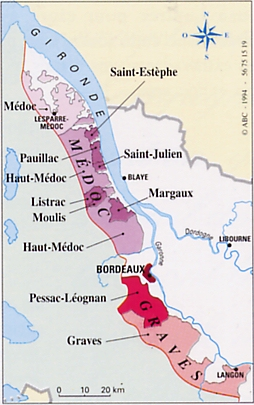
2011 Château Les Hauts de Plaisance Haut-Médoc

Where: Haut-Médoc, Bordeaux
Who: Chateau Les Hauts de Plaisance, part of Chateau Pontoise Cabarrus
What: 65% Merlot, 35% Cabernet Sauvignon
Tastes like: Bigger body red, with mellow, well integrated tannin and chocolate notes. Slightly herbal/ green pepper on the nose (that’s CS for you.)

What to pair with: Red meat!

2011 was a solid but not spectacular year in Bordeaux. But in such vintages some people make extraordinarily good wine. Early this week the group of 24 Bordeaux lovers got together to try 14 reasonably priced wines from 2011 to see which was the best. We tasted the wines blind. Each person was asked to name his or her top four.
The group winner:
Ch. Les Hauts de Plaisance (literally the Heights of Pleasure) a second wine of Ch. Pontoise Cabarrus, classified as a Cru Bourgeois. It comes from Bordeaux's premium Haut Medoc region and is just across the border of St. Estephe, one of its four major communes.
With 2/3 Merlot and 1/3 cabernet; the wine drinks deliciously now, but it will age for two to three years.
The Tereygeol family makes it in much the same exacting way as they do Ch. Pontoise; l yields, rigorously grape selection at harvest, cool fermentation, a year's oak aging.
What's different? The vines are mostly only 10 to15 years old ( not. It is rounded and mixes soft fruit and crisp textures, the hallmark of good Bordeaux. It's a wine you can savor.


2011 Ch. Les Hauts De Plaisance (Haut Medoc); Color: very dark opaque ; Aroma: herbal, rather fullish with deep notes opaque, a sense of underlying richness; Mouth: firm & rounded forward and giving, clean, smooth textured, medium body, a strong sweet fruit note, very finely astringent on the finish.

Sunday, February 15, 2015

New menu items rolling out this week

Please be aware that not all of these are on all menus yet. Keeping you on your toes!

Chicken Liver Mousse
        Chicken livers are cured overnight with salt, brown sugar and vin santo, They are then seared in grapeseed oil to an internal temperature of 165. Once seared they are pureed with sherry vinegar, and caramelized onions.  Butter is added to the mousse as it is pureed. The mousse is served in a mason jar and finished with sea salt and fennel pollen.

Boston Bibb Lettuce Salad
Blood Orange, Pistachio Butter, Sunchokes, Boquerones Bibb Lettuce is tossed with tarragon leaves, and blood orange supremes, in a pistachio and blood orange vinaigrette. The vinaigrette is made from blood orange juice, sherry vinegar, shallots, olio verde, and pistachio butter (toasted pistachios ground in the robo-coup with olive oil and salt). Garnishing the salad are sliced boquerones and sunchokes shaved to order and dressed with lemon juice and olio verde.

Blue di Bufala $8 Pasturized buffalo milk cheese from Lombardy. Animal Rennet, aged 2-3 months. Made Quattro Portoni, a by a pair of brothers near bergamo produce traditional italian cheeses but substitute buffalo milk for a twist on tradition. Crumbly and creamy, high fat, and a little tangy but not overly powerful.

Selles sur cher $7 Pasturized goat cheese, aged 3-5 weeks, named for a commune in the Loir region of france. Dusted with wood ash to promote the growth of mold on the exterior. Smooth in texture, light and fresh with a citrusy tang.

Reading ‘Raclette’ $7 Unpasturized cows milk cheese from Spring Brook Farms in vermont. The farm is a non-profit that teaches urban children about “where food comes from”. Reading is a raclette style cheese, aged 12-15 months with a natural rind. Traditional raclettes are alpine style made in france or switzerland, and are similar to gruyere. Reading is semi firm, with a creamy mouth feel, the cheese is nutty and a little sweet.

Gusto Antico Taleggio $7 Unpasturized Cows milk cheese from Lombardy. Made in the traditional style (not using modern machinery) this cheese is particularly interesting because of the use of unpasturized milk, which is uncommon in taleggios. creamy and smooth with a definite mushroomy background. Washed rind.


Pig Head Mortadella
Pistachio, Orange Peel, Nutmeg, Clove

We are getting in whole pigs heads, removing the ears and cooking them for 12 hours in the combi until tender, then dicing the ears. The rest of the head is deboned and deskinned, seasoned and allowed to rest overnight. The meat is ground twice through a fine die, during the second grinding ice is added. The ground meat is then placed in the stand mixer along with the diced ears and some diced pork fat. This is then whipped vigorously until it reaches a temperature of 60 degrees fahrenheit to ensure a smooth emulsion of meat and fat. The mixture is then stuffed into artificial sausage casings and cooked in the combi. Crushed toasted pistachios garnish the meat.

Thursday, February 12, 2015

Reservation Policy

Reservation Policy at The Salty Pig

The short version: We accept reservations for parties of 6 to 15 people, for lunch and dinner, seven days a week.

The much longer version:

- Reservations should be taken by hosts and managers only, and every reservation should be initialed by the person who accepted it and the date they took it.
- We do not take reservations more than 30 days in advance (to allow for buy-outs or private parties)
- All reservations of parties greater than 8 should be approved by a manager (ideally while the guest is still on hold.)
- All parties larger than 15 should be directed to the general manager. Please encourage guests to email ines@thesaltypig.com for information on private parties.
- While we use “reservation slots” for our convenience and as a planning tool, we never discuss this with the guests. The only language we should use is “we have availability at 6:30 or 8PM that day,” or “unfortunately we are fully reserved.”
- While guests get a text message from TableUp asking them to confirm their reservations, the host is responsible to follow up with any reservations that are not marked “confirmed!” at the beginning of their shift (11:30AM or 4PM)
- For confirmed or unconfirmed reservations we will give the guests the courtesy of waiting 15 minutes for their party. If no guests have arrived and we aren’t able to reach the party by phone, we might make the table available to other guests, at the discretion of the MOD.  
- Due to our space limitations, we aren’t able to take reservations for “drinks and cocktails” or reservations for unclear numbers of guests (“There will be 20 people but not all at once”). Reservations are for lunch/ dinner only and we ask the guest making the reservation that they confirm the number of their party before making or confirming the reservation
- Any request to deviate from these procedures should be directed to a manager.
- On the occasion that a private party has been reserved for a particular day, a manager will make a “place holder” reservation on that date and indicate 99s guests. No other reservations should be taken on a day with a “99” mark
- Current slots (subject to change) are 6, 6:30, 8, 8:30 on weekdays and 6 and 6:30 on Fridays and Saturdays. Again, please don’t mention this to guests.
- When talking to guests who are looking for a date for which we have filled all slots, use the language “unfortunately we are fully reserved.” Do not encourage guests to “try their luck” at the door.
- While it might feel counter-intuitive to discourage large parties beyond the reservations, we are actively taking care of our guests by not over promising. Keep in mind that when we tell guests that “maybe the wait won’t be too long” or anything of the sort, we are in fact Over Promising something we have no control in delivering. Always strive to Under Promise and Over Deliver--That’s they way for the restaurant to shine!
- Taking care of large parties: large parties, particular those of more than 8 guests, or consecutive smaller parties, can throw a wrench in our very small kitchen. Always communicate about such parties with the managers, both FOH and BOH so that we can take care of every guest in the restaurant appropriately.
- SP guests: if a reservation is for known friends of the restaurant, industry folks, family or friends of any employee, or otherwise “special people” we should be marking the reservation notes with “SP”. This should also be communicated to the chefs and FOH managers both when going over reservations and when the guests have arrived.
-  Communication with the chefs in general, and when we are very busy in particular, is a crucial function of the host team. In addition to “open menu” counts, hosts should be communicating when large parties are arriving/ completed (“10 top is partially arrived” “10 top is complete”) as well as any SP guests or information of note.


Wednesday, January 28, 2015

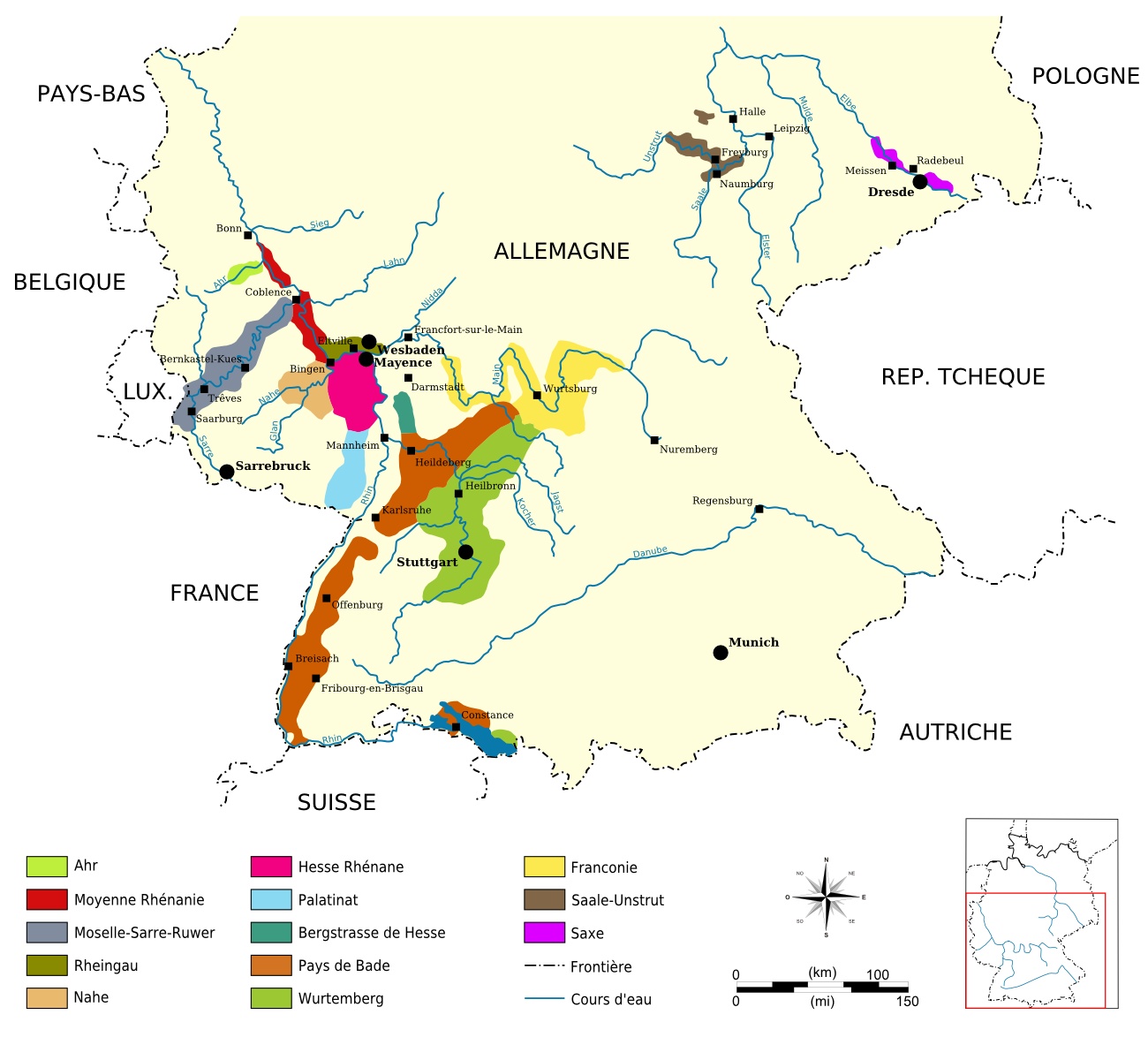
2012 Nik Weis St. Urbans-Hof Wiltinger Alte Raben Riesling


(aka 2012 St. Urbans-Hof Riesling) BTG 12/48

Where: Mosel, Germany
Who: Nik Weis is the third generation winemaker at St. Urbans-Hof
What: Riesling!
Tastes like: Biting into a green apple. Sweet, tart and refreshing, very well balanced with the classic note of Riesling we’ve all have come to call “petrol.”
What to pair with: Riesling loves food and food loves riesling. The most killer pairing on our menu right now has to be this lovely lady with the Tart Famblée. Why? Because the richness of the bacon gets cut by the acid in the wine, and the sweetness of the fruit highlights the sweetness in the caramelized onions. Also, pork tasting, pork belly, cheese of all sorts but particularly the creamiest ones, the broccoli pizza, and anything with spicy heat.


10 Point Philosophy:

  1. At the beginning of great Mosel wine is a concept. To achieve greatness one needs sufficient knowledge and a clear vision of what is possible. This is true with any authentic wine, not only those from the Mosel.
  2. An Authentic Mosel wine is made from the Riesling grape, and our wines are exclusively Riesling. This variety is perfectly suited for our region.
  3. Mosel Riesling must be grown on Slate. Slate is a soil type found in precious few wine regions - but is widespread in Germany, especially in the Mosel valley.
  4. A vineyard should not only be grown, it should be grown over decades. One may look upon a vineyard simply as a 'production facility'; then it'd be enough merely to have a fertile soil and productive vines. What will be lacking in this instance will be a sense of typicity in the finished wine.
  5. The vine loves the sun, but even more the shadow of its master. "Le vigne aime le soleil, mais plus encore l’ombre de son maître" is an old proverb of French winemakers that states poetically, yet clearly, that a good wine needs the sun but, even more, the maintenance of the vintner.
  6. The path of grape to bottle must be as short and undisturbed as possible. In order to preserve the individual vineyard character, the flow of winemaking from the grape to the bottle must be as smooth and gentle as possible.
  7. Making true mosel wine also means to have faith in nature. The slower that a fermentation occurs the slower CO2 is released; a cool cellar is the ideal condition for slow fermentations because fruitiness will develop best in this manner.
  8. Sweetness belongs to Mosel wine like bubbles belong to Champagne. A Special Wine has a Special Character. The oldest, most classic wine regions produce wines with a singular character.
  9. Organizing wines by quality levels (Pradikat) supports the best:
Germany is the only wine producing country which separates its wines into two distinct categories dictated by sugar levels at harvest
  • Qualitätsweine (allowed to have sugar added to the juice before fermentation so as to increase alcohol, known as "chaptalization", named for the French chemist J-Antione Chaptal [1756-1832]) and
  • Prädikatsweine (in which chaptalization is forbidden and strictly distinguished by sugar level at harvest).
Before the 1971 revision of the German Wine Law, prädikat wines were rightly declared 'naturweine' (natural wines).
Provided the winery adheres to these proscriptions, the wine lover can rely upon this codified series of profiles. This is how we achieve clear wine categorization of: Kabinett--light and elegant with low alcohol. Spätlese--juicy/fruity character clearly showing a minerally expression.
Auslese--a mouthful of intensely sweet/sour character in a viscous, mouth-coating body with enormous aging potential. Beerenauslese--rare and intensely sweet with a varying 'noble rot' character. Trockenbeerenauslese--very rare and sweet with a unbeatable earth and 'noble rot' character--.
10. Mosel wines age gracefully.

2011 Ciacci Piccolomini d’Aragona Rosso di Montalcino

New By the Bottle wine! $55

Where: Montalcino, Tuscany, Italy
Who: Paolo and Lucia Bianchini
What: 100% Sangiovese
Tastes like: very balanced, ripe fruit, integrated tannins. Bigger bodied than most Sangiovese we’ve tasted. Delicious!
What to pair with: Grilled anything, steak, red meat in general.


From the Wine Spectator's article "Brunello di Montalcino: The Cream of the Crop":
"Brother-and-sister team Paolo and Lucia Bianchini continue to make excellent Brunellos in the tradition of their father, Giuseppe, who died in 2004. They are better employing their new modern cellars, which were completed last year, and continue to maintain their south-facing vineyards at near pristine levels. The Brunellos emphasize finesse and balance, with layers of ultrafine tannins and subtle ripe fruit, yet they age incredibly well. The Bianchini family was gifted its Brunello estate in 1985 by Countess Elda Ciacci Piccolomini d'Aragona, who had no heirs; Giuseppe had been the estate manager." -- The Wine Spectator, July 31, 2007

Ciacci Piccolmini is one of the most sought-after producers in all of Italy. This ancient estate has 35 hectares of superior holdings in the prized Castelnuovo dell’Abate zone, including the "Pianrosso" vineyard (from which the best grapes are selected for the Brunello di Montalcino) and the "Fonte" vineyard, which produces grapes for the Rosso di Montalcino.  Plantings of Syrah, Cabernet, and Merlot are to the south, where the Orcia river provides a milder microclimate.  The estate is a member of the EU "Lotta Integrata" movement, which promotes reduced use of chemicals and organic viticulture; at Ciacci, fertilization is organic, and pruning and harvest are done by hand.

Although the estate is not certified, the guidelines of organic agriculture are followed. Only sulfur- and copper-based products are used. The area is sheltered by Mount Amiata and enjoys excellent air circulation. Only organic fertilizers are used (there is a cattle farm nearby for manure). The soil between the rows of vines is tilled and no herbicides are used. Minimum dosages of SO2 is used in the wines.

Wednesday, January 21, 2015

2013 Guy Allion Sauvignon Blanc (86 Haut Marin) $10/ Glass $40/ Bottle

2013 Guy Allion Sauvignon Blanc

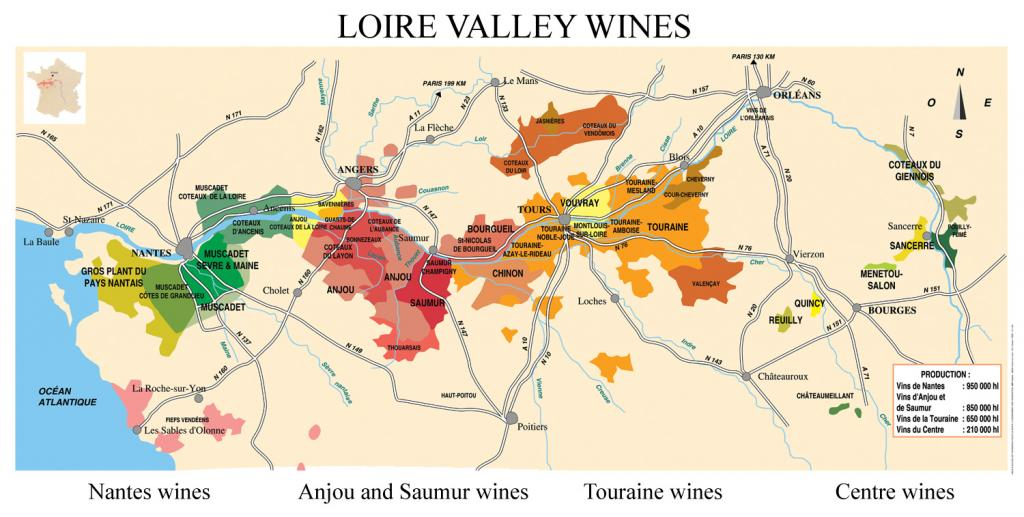
Where: Touraine, Loire Valley, France
Who: Guy Allion

What: Sauvignon Blanc
Tastes like: Refreshing, grassy Sauvignon Blanc. Citrusy, but not that intense candied grapefruit you get from some new world Sauvignon Blanc. Rather understated and delicious.
What to pair with: Salads, shellfish, citrusy vegetables or fish.

Touraine is the district at the very heart of the Loire Valley wine region of France, both geographically and in terms of production. Named after the city of Tours at its center, it follows the course of the Loire river for roughly 60 miles (100km), from Blois and Mesland in the east to Chinon and Bourgueil in the west.

This crisp, grassy Sauvignon Blanc comes from the Touraine region of the central Loire Valley just to the east of Tours and is made by Guy Allion, one of the leading lights of the Haut Perron area. The estate is managed according to the organic 'Terra Vitis' programme, a codified system which encourages not only respect for the environment but knowledge of the land, parcel by parcel. Therefore only natural rather than chemical solutions are pursued in the vineyard.