Sunday, February 4, 2018

NV Szigeti Brut


NV Szigeti (ZIG-it-ee) Brut 
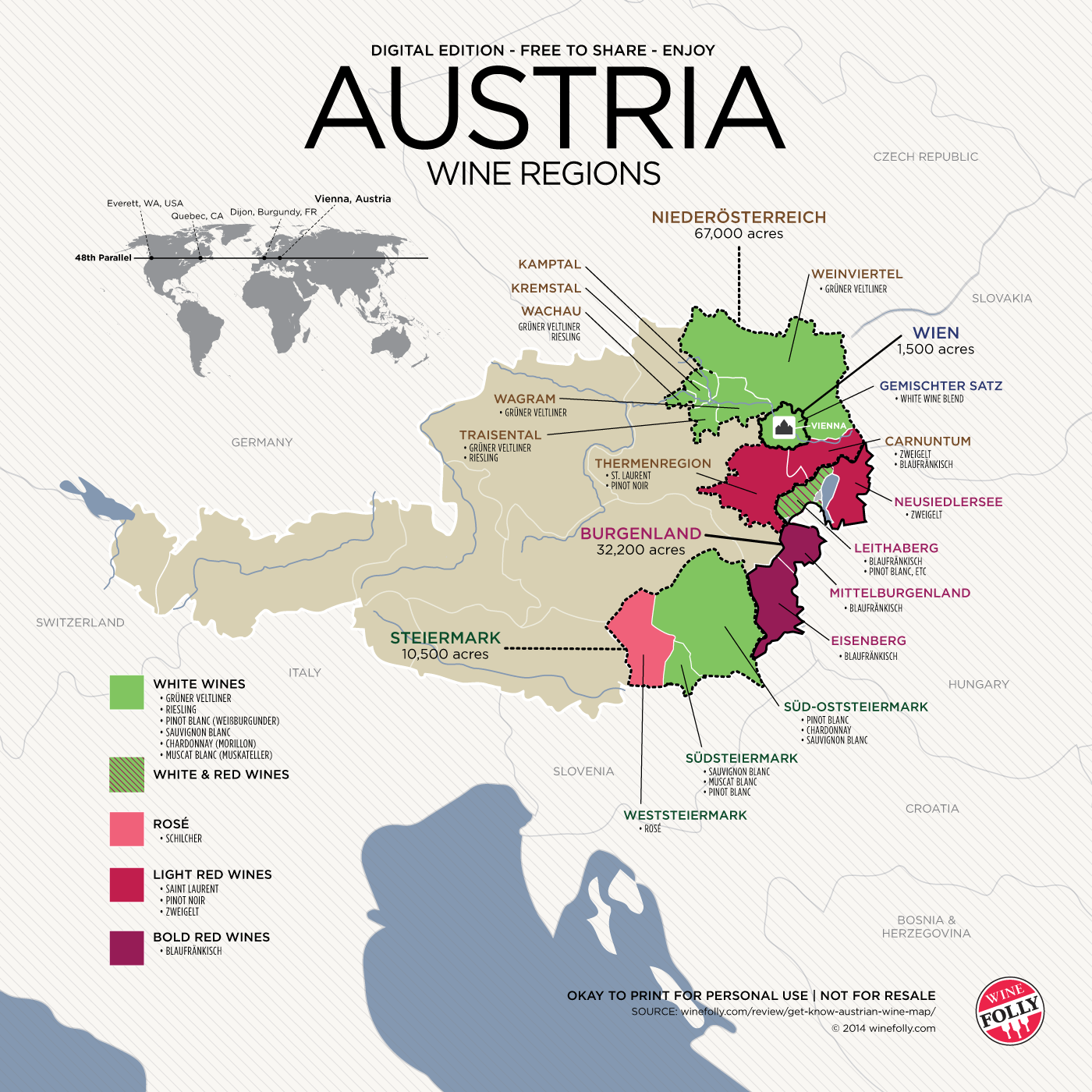

What: 100%  Gruner Veltliner
Who: Norbert and Peter Szigeti
Where: Gols, Burgenland, Austria
Tastes Like: Bright and tart, fine bead and aromas of green apple.
Pairs With: Great aperitivo, lighter dishes

The Where: Few other places are as closely linked with first-class wine as the market town of Gols in the heart of the Neusiedler See-Seewinkel wine-growing region. Gols is decidedly lucky in terms of location. The interaction between Parndorf heath to the north, the Seewinkel in the south, the heath land in the west and lake Neusiedl in the east, results in a delicate microclimate which produces excellent wines.

The Who:  Sektkellerei Szigeti (pronounced ZIG-it-ee) is a sparkling wine house located in the winemaking village of Gols in Burgenland. The company began in 1990 when brothers Norbert and Peter Szigeti took over the family business. Past generations of Szigeti produced small quantities of wine in their village in a traditional mixed agriculture system.  The brothers operate Szigeti as a négociant, buying fruit from contracted growers and owning no vineyards, yet they make a broad range of wines, all by méthode traditionnelle, and all made in fresh style with clear varietal expression.

The What: Wine made from 100% gruner veltliner grapes from a number of small farms near Lake Neusiedl in Burgenland and Niederösterreich. Szigeti works closely with growers to ensure that all grapes have been grown without chemical intervention.  All Szigeti sparkling wines are produced by méthode traditionnelle, a highly labor-intensive bottle-fermentation process. For Szigeti, the process of méthode traditionnelle must not trump the integrity of the fruit. In other words, the dominant perfumes and flavors of the wine should still be those typical of Gruner Veltliner, and should not be masked at all by the yeasty, fermentative flavors of secondary fermentation in bottle. Only Champagne yeasts are used throughout the vinification process and dosages are prepared using local sweet wines.

NV Cleto Chiarli "Vigneto Cialdini"

NV Cleto Chiarli "Vigneto Cialdini" Lambrusco

Who: Cleto Chiarli
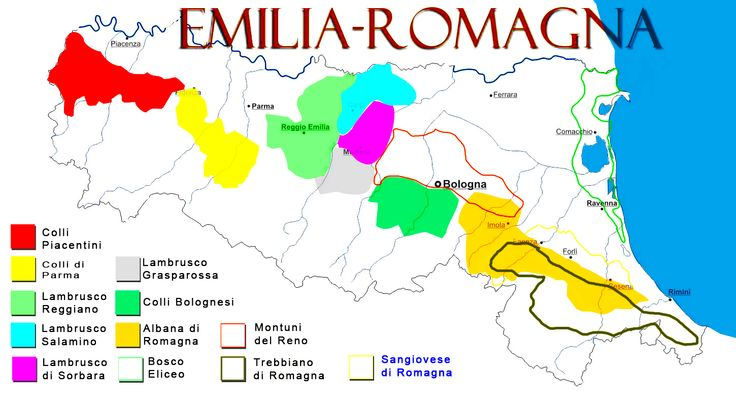
What: 100% Grasparossa
Where: Castelvetro, Emilia-Romagna, Italy
Tastes like: Smells intensely of brambly, stewed fruit. Medium-minus body with a fine bead and a bone dry finish.
Pairs with: Prosciutto di parma, mortadella, any pizza, anything fatty and savory.

The What: Lambrusco is a style of semi-sparkling to sparkling wine from the Emilia-Romagna region of Italy. Up to 6 different grapes can be used to make the wine, but the primary grapes in the wines of quality are Grasparossa, Salamino, and Sorbara, with Sorbara being considered as making the finest wines due to its concentration of flavor and high acidity. The vast majority of Lambrusco is made with the Charmat method and fermented to a frizzante level of sparkle. There are some rare exceptions that feature champagne method and spumante bubble.

The Where: Emilia-Romagna is a wealthy region in the northeast of Italy, just to the south of the Veneto and Lombardy. It is known as for being the home of the University of Bologna (the oldest in the world), many Renaissance cities (including Bologna, Modena, and Parma), a producer of luxury cars (Lamborghini, Masserati, Ducati), and as a major hub for fine foods and salumi. Notable foods native to the region include: Balsamic vinegar, parmigiano reggiano, mortadella, prosciutto di parma, lasagne, and tagliatelle. What grows together, goes together, and Lambrusco is a natural pairing for all of these foods. 
 
The Who: The Chiarli family have owned land in the lambrusco-producing areas of Emilia-Romana for 150 years. Today they own 3 distinct estates, totalling 100 hectares under vine. Each is specifically suited to producing certain types of wine, and are at the heart of the most important DOCs of the region.

The Chiarli family have owned the Castelvetro estate for over 130 years. It lies in the heart of the wine-producing area of the Lambrusco di Grasparossa, in the Castelvetro municipality. The estate comprises 50 hectares (124 acres) of vineyards, which are situated on ancient alluvium (riverbed deposits) around the Guerro stream, at the foot of the Apennines. In this area, the land is gently undulating for the cyclical alternation between erosion of the soil and deposition of sediments. The upper stratum is around 50 cm thick and is mainly composed of silt, whilst underneath it one can find a layer of gravel. Here one can also find the ‘Tenuta Cialdini’, an estate which includes the ‘Vigneto Cialdini’. This famous vineyard provides the grapes for the Grasparossa ‘Generale Enrico Cialdini’, a true Lambrusco ‘cru’ with unique and unmistakable qualities


Thursday, February 1, 2018

Piedmont and Nebbiolo by Cedric

Piedmont Map

Nebbiolo Characteristics

Nebbiolo & The Piedmont

Loire Valley by Jamie

Loire Valley

Veneto, Soave, and Prosecco with Manny

The Triveneto (Italian pronunciation: [triˈvɛːneto]), or Tre Venezie [ˈtre vveˈnɛttsje], locally [ˈtrɛ veˈnɛtsje], is a historical region of Italy. The area included what would become the three Italian regions of Venezia Euganea, Venezia Giulia and Venezia Tridentina.[1] This territory was named after the Roman region of Venetia et Histria.
This area is also often referred to as North-Eastern Italy or simply North-East,[note 1] in Italian Italia nord-orientale or Nord-Est.
Nowadays the name Triveneto is more commonly used in the Northern Italian dialects, while its original title is still in use in the Neapolitan Language and Southern Italian dialects, and it includes the three Italian regions of Veneto, Friuli-Venezia Giulia and Trentino-Alto Adige/Südtirol: that is to say, the provinces of Belluno, Bolzano, Gorizia, Padua, Pordenone, Rovigo, Trento, Treviso, Trieste, Udine, Venice, Verona, and Vicenza. This area is also the Catholic Ecclesiastical Region of Triveneto.[2]


Veneto is a wine region in north-eastern Italy, one of a group of three highly productive Italian regions known collectively as the Tre Venezie (after the Venetian Republic), which is a large area comprised today of the Italian regions of Friuli Venezia-Giulia, Alto Adige and Trentino, and Veneto. The Veneto is the biggest Denominazione di Origine Controllata (DOC) producer of the three. Although the Tre Venezie collectively produce more red wine than white, the Veneto region produces more whites under DOC and is home to the Soave and Prosecco wines.
The region is protected from the harsh northern European climate by the Alps, the foothills of which form the Veneto's northern extremes. These cooler climes are well-suited to white varieties like Garganega (the main grape for Soave wines),[1] while the warmer Adriatic coastal plains, river valleys, and Garda Lake zone are the places where the renowned Valpolicella, Amarone and Bardolino DOC reds are produced.
In Veneto, two different wine areas are clearly distinguishable: an Eastern part, close to the Venice Lagoon between the hills of Treviso, the plain of Piave river and Adriatic coast, where it is typical to produce the famous Prosecco (Glera), and other varieties are grown like Merlot, Carmenere, Verduzzo, Raboso Piave, Refosco, Tocai, Verdiso, Marzemino; and the Western part, close to Garda Lake and the city of Verona, famous for the wines based on the varieties Corvina, Rondinella, Garganega, Trebbiano of Soave, and Oseleta.
In the central part of the Veneto the winemaking transitions between the varieties and styles of the Eastern and Western parts. In that area you can find the Colli Euganei, the hills close to Padua, that is a special Mediterranean microclimatic zone; it is even famous for the Moscato fior d'arancio production, a sparkling dessert wine.
Another area in the North-center of Veneto, close to Asiago, is Breganze, where the dessert wine Torcolato is produced with the Vespaiolo grape.
The traditional vine training system of the eastern part is the Sylvoz system, today replaced by the Guyot system, while in the western part there is more traditionally the Pergola system. Veneto's growers use modern growing methods and systems in the vineyard and for wine making. While most of the 'classic' wines from this area are based on native grape varieties, like Glera (formerly known as Prosecco) and Verduzzo, high demand for Veneto wines in the European and US markets has galvanized the region's producers into experimentation with Cabernets, Chardonnay and Pinot varieties, among others. One of Italy's leading wine schools, Conegliano, is based here and the nation's most important wine fair, Vinitaly, takes place each spring in Verona.[2]
Veneto is the 8th largest region of Italy in land mass, and a population of 4,371,000 ranks it 6th in that regard. It has over 90,000 hectares (220,000 acres) of vineyards, of which 35,400 are acclaimed DOC. Annual production totals 8,500,000 hectolitres, 1,700,000 or 21% of which is DOC, making it the biggest DOC producer in Italy. White wine accounts for 55% of the DOC production in Veneto


Soave (wine)

Soave (pronounced So-Ah-Ve) is a dry white Italian wine from the Veneto region in northeast Italy, principally around the city of Verona. Within the Soave region are both a Denominazione di Origine Controllata (DOC) zone and a Denominazione di Origine Controllata e Garantita (DOCG) designation known as Soave Superiore with both zones being further sub-divided into a general and classico designation for the wines produced in the heartland of the Soave region around the sloping vineyards of Verona.
Throughout the Soave production zone Garganega is the principal grape variety though Trebbiano di Soave and Chardonnay are permitted in varying percentages. While most Soave is dry, still wine within the DOC zone a sparkling spumante style is permitted as is the passito Recioto style, that in 1998 was granted its own Recioto di Soave DOCG designation for grapes grown in the hilly region
Prosecco (/prəˈsɛkoʊ, proʊ-/,[1][2] Italian: [proˈsekko]) is an Italian white wine. Prosecco controlled designation of origin can be spumante ("sparkling wine"), frizzante ("semi-sparkling wine"), or tranquillo ("still wine").[3] It is made from Glera grapes, formerly known also as Prosecco, but other grape varieties may be included.[4] The following varieties are traditionally used with Glera up to a maximum of 15% of the total: Verdiso, Bianchetta Trevigiana, Perera, Glera lunga, Chardonnay, Pinot Bianco, Pinot Grigio and Pinot Noir.[5]
The name is derived from that of the Italian village of Prosecco near Trieste, where the grape and wine originated.[6]
Prosecco DOC is produced in nine provinces spanning the Veneto and Friuli Venezia Giulia regions.[7] Prosecco Superiore DOCG comes in two varieties: Prosecco Conegliano Valdobbiadene Superiore DOCG, which can only be made in the Treviso province of Veneto on the hills between the towns of Conegliano and Valdobbiadene (north of Treviso), and the smaller Asolo Prosecco Superiore DOCG, produced near the town of Asolo.[7]
Prosecco is the main ingredient of the Bellini cocktail and can be a less expensive substitute for Champagne.[8][9] It is also a key ingredient of spritz, a cocktail popular in northern Italy.

Upcoming Cheese Changes 2/1/18


Challerhocker   --> ALPHA TOLMAN

Raw Cow's Milk
Alpine-Style
Aged 8-12 months
Jasper Hill Creamery, VT


Alpha Tolman is named for a philanthropic dairy farmer who built the Greensboro library in 1900. Alpha's grandfather, Enoch, was one of our town's original settlers. His namesake cheese is made in our satellite creamery, located within the Vermont Food Venture Center in Hardwick, VT - a facility designed to incubate value-added projects and enrich our agricultural economy.

Sensory Notes: Alpine cheeses like Appenzeller inspire the recipe for this Jasper Hill Creamery original. Alpha Tolman has a buttery, fruit & nut flavor when young, developing bold meaty, caramelized onion flavors as it matures. The texture is dense and pliant, easily portioned and ideal for melting.

Pairing and Service: The texture, aesthetic, and flavor make Alpha Tolman an ideal choice for fans of Appenzeller (or fondue!).  Try pairing with a robust ale, plummy red wine, or onion jam. For a satisfying meal, follow the lead of Swiss/French raclette – melt onto a plate of fingerling potatoes, cured meat and natural sour pickles.


Dorset   --> LA TUR

Past. Cow, Goat, and Sheep Milk
Aged 3-5 Weeks
Piedmont, Italy

La Tur is a straw-colored, creamy, soft mid-aged cheese made from cow, sheep and goat
milk. The taste is mild when fresh, becoming stronger with age. The idea of La Tur – “Little Tower” –originated from the hundred towers built around the Alta Langa land during the Middle Ages to defend the village against invasions.

La Tur exemplifies the tastes of the traditional Alta Langa land. The three milks are blended together in such a harmony that does not allow one flavor to overwhelm another. The tangy taste of goat milk and the strong one of sheep milk are well combined with the sweetness of cow's milk cream.


Stilton  --> VERDE CAPRA

Past.Goat's Milk
Aged 80 days
Lombardy, Italy

Verde Capra is one of those rare blue cheeses made from goat milk. Aged by Guffanti, this lovely cheese
shows a perfect balance between the tang and creaminess of goat milk. Like many blues, Verde Capra is rindless and wrapped with foil to keep it from drying out. The texture is dense, even slightly fudgy, yet creamy.


Tomme de Savoie  --> KINSMAN RIDGE

Unpast. Cow's Milk
Aged 3-5 Months
From Landaff Creamery, NH aged at the Cellars at Jasper Hill Farms, VT


Deb and Doug Erb's debut cheese, Landaff, was designed with approachability and versatility in mind. They aim for something more daring with this second creation; Kinsman Ridge is inspired by funky French tommes like St. Nectaire, a style that's enviably more common in Europe than on this side of the pond.

Sensory Notes: Kinsman Ridge is a semi-soft, tomme-style cheese with aromas of fresh butter, forest and cured meat. Young wheels are washed with brine before a natural, mottled rind is cultivated. As it matures, Kinsman's interior transitions from smooth and firm to a giving and creamy consistency. Flavors are rich, savory, and softly floral, with hints of roasted artichoke and asparagus.

Pairing and Service: Kinsman's rustic appearance and decadent texture make it a perfect choice for a composed cheese board or plate. Try pairing with a Sauvignon Blanc, wheat beer, or saucisson sec. Though mottled in appearance, the cultivated, mixed rind is delicate enough to be palatable and does not need to be removed before portioning.


Brie de Nangis --> MT. ALICE

Past. Cow's Milk
Aged 3-5 Weeks
Von Trapp Farmstead, VT

This cheese is our soft, bloomy rind named after the peak nearest to our farm. Similar to Brie or Camembert, Mt. Alice has an incredibly soft, creamy texture and a savory milky, buttery flavor. We age this cheese made from our pasteurized organic cows’ milk three to five weeks.